
Remember those first days back at school after the summer holidays and the teacher would go over some of the things you covered in the previous term (or semester to my friends across the pond)?
Well, that’s the mindset I’m asking you to adopt this week because we’re doing it New School Year Style today and going over some core fundamentals of online marketing.
Let’s dive straight in ~ The 5 Things To Consider Before Starting An Online Business.
Consider this Online Marketing101. Let’s gooo!
1. Who
These are your customers and the people you serve in your wider community, such as social media followers and subscribers to your email list.
They are your dream customers - or soon-to-be dream customers - and the reason you show up and do what you do.
It’s important to know who they are, especially if you have more than one ICA (ideal customer avatar).
Ask yourself, Who am I in business for?
Then list the different types of customers and design a profile for each person.
Knowing who your dream customers are will make it easier for you to attract the clients you want.
According to Forbes, drilling down our ideal customer can help increase brand awareness.
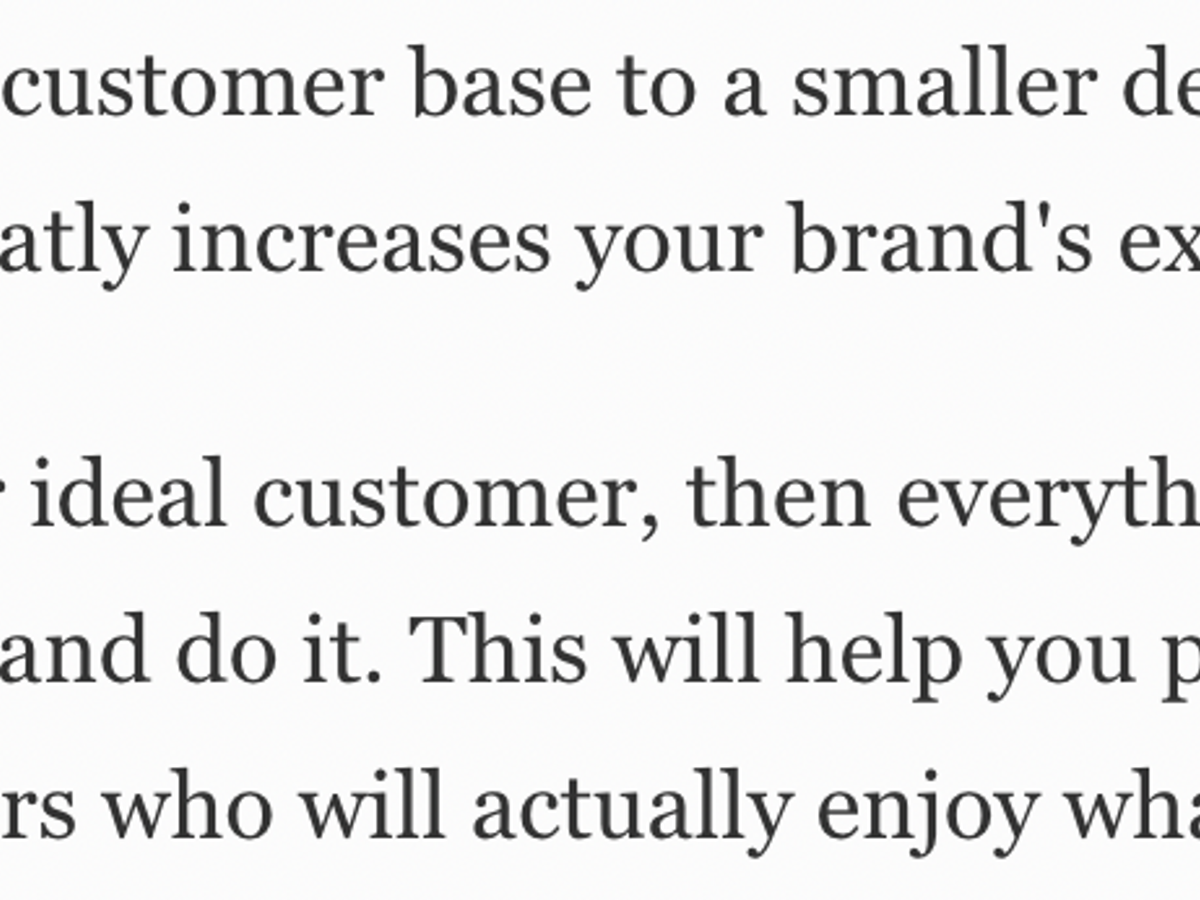
Forbes.com

Not sure how to attract your dream customers online? This guide will set you on the right track. By the end of this workbook, you’ll know your dream customer so well, they’ll think you’ve been reading their journal!
Ok, let's take a look at the second pillar.
2. What
In a nutshell, you'll want to consider these questions:
- What problem do I solve
- What solution do I offer
- What desire do I fulfil
- What products do I sell
- What services do I provide
- What free content can I share
- What platforms will I promote on
- What role do I shine in
When you're just starting out you may not know the answers to all of these but this list is a great jumping-off point.
These questions are designed to inspire more creative ideas but remember, less is more. It works in your favour to niche down and get almost granular in your area of expertise, at least in the beginning.
You cannot be everything to everyone! So, in the same way, as you narrowed down your ideal customer use the questions above to narrow down what you will sell in the beginning and get laser-focused on creating the best product and service.
I love this story about Steve Jobs when he returned to Apple. At the time the company was on the brink of collapse. Jobs saved the company by reducing their offerings by 70%.
The story goes like this:
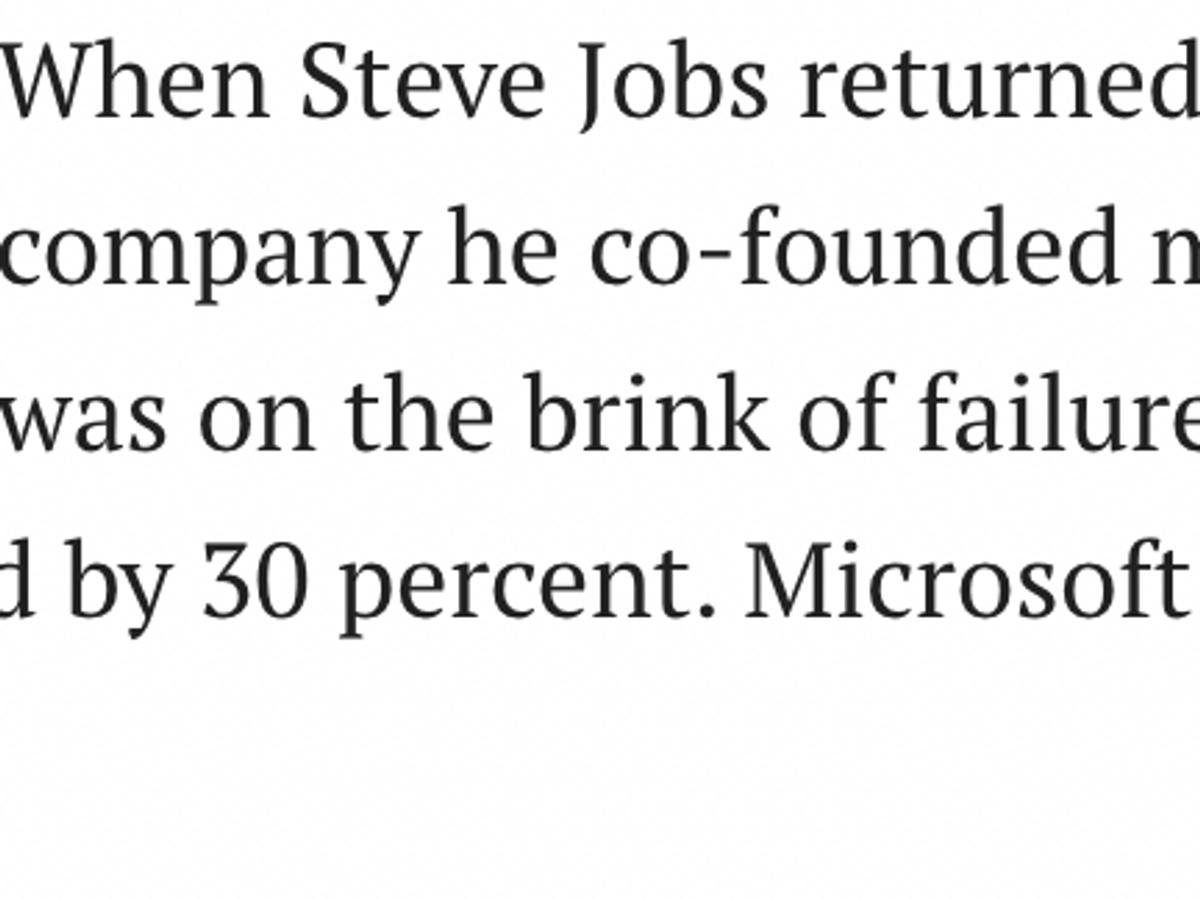
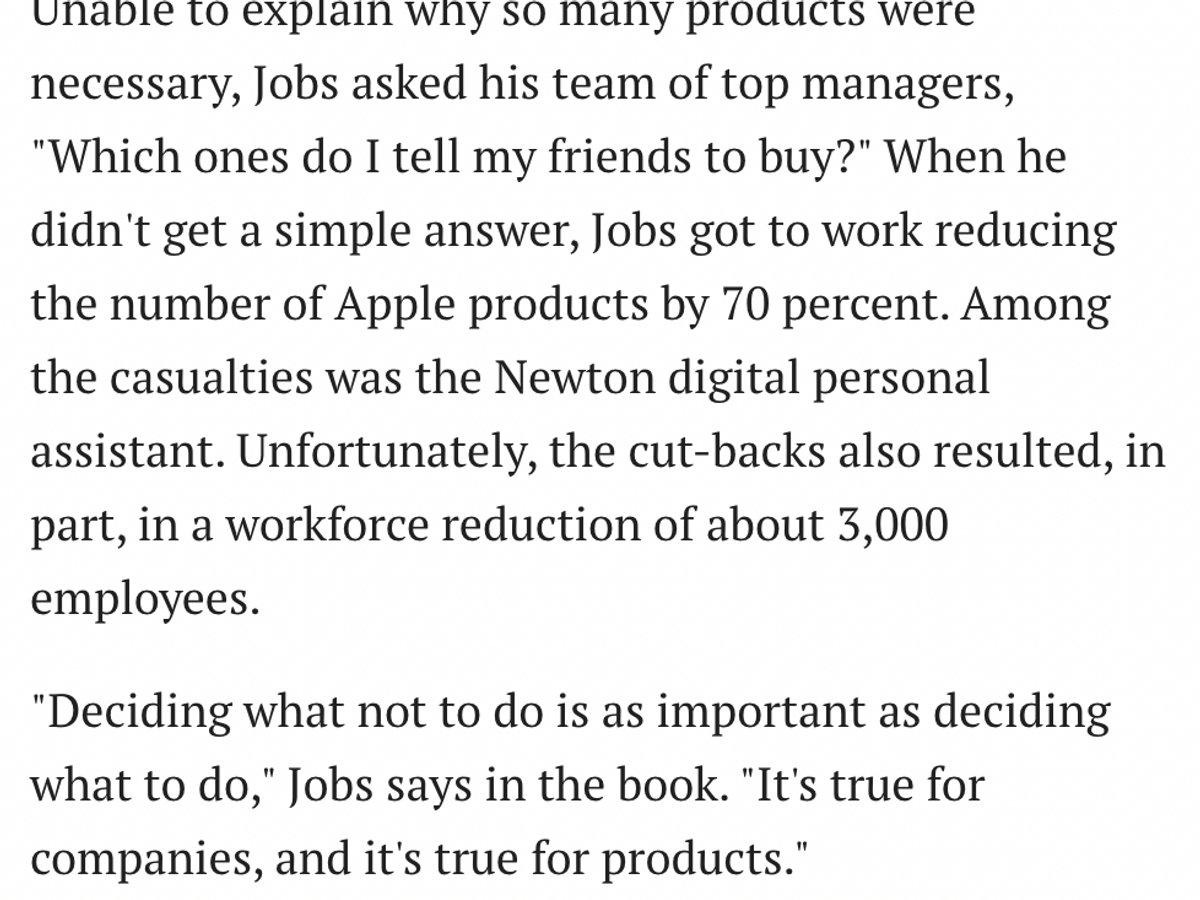
Source: Entrepreneur.com
I love when he says: “Deciding what not to do is as important as deciding what to do.”
OK, let’s carry on.
3. Why
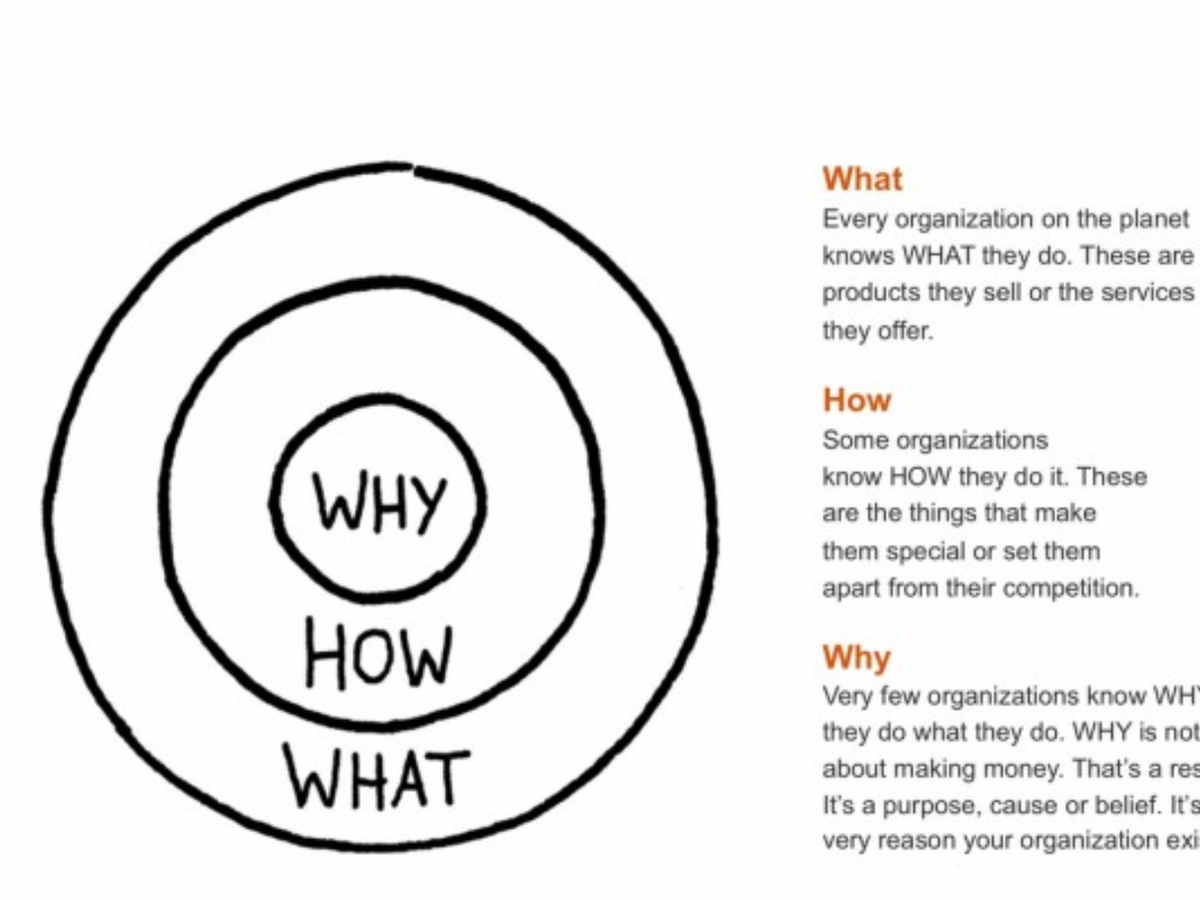
This is the reason why you do what you do.
It’s important because it’s the driving force behind what wakes you up in the morning and keeps you up late at night.
Your why should be like a burning flame that lights you up and keeps you going when you hit the wall.
It’s the reset button when doubt starts to creep in and imposter syndrome pays you a visit.
Your why needs to be robust, unshakeable and a guiding light in your world.
It can be deeply personal or be public knowledge. It can feel small and intimate or it can be big and bold. Your why is your purpose in life and it needs to lie at the heart of the decisions you make and the actions your take.
Working hard for something we don’t care about is called stress. Working hard for something we love is called passion ~ Simon Sinek, Author of the book, Start With Why
The importance of knowing your why can be seen in the following diagram.
Source: Thekennedyconnection.com
4. How
OK, here’s where you get strategic.
You want to take the insights from the first three points: The Who, The What and The Why and create a plan of action.
When you have a clear understanding of the people you wish to serve, the products and services you want to offer and the driving force behind your mission then you’re ready to design a course of action to turn your dream business into a reality.
So, here’s how this section comes together ~
It’s question time, baby! Let’s get into the nitty-gritty details by asking questions like:
- How will I sell my products? Online or offline or a combination of the two?
- How will I attract my customers online?
- How will I advertise my business? Online/offline
- How will I use social media to increase brand awareness? Run ads?
- How will my customers interact with my brand or business?
- How will they feel when they visit your website?
- How will they contact me and engage with my customer services team?
- How will I grow my business and increase my social media following?
- How will I use email marketing or social media marketing to my advantage?
- How will I automate aspects of my business?
These are some of the questions you’ll want to explore so you can find out how to grow your business online.
Be intentions with your questions because this is where you create a digital marketing strategy that moves the needle in the right direction.
“It is not the answer that enlightens, but the question.” ~ Eugene Ionesco
5. When
And finally, the last piece of this marketing puzzle is the when.
You’ll want to decide when your ideas and plans will materialise. Whether you’re starting a business, a new habit, or embarking on a new project, there will come a time when you’ll have to take action.
This is the act of setting goals. Why is setting goals important?
Knowing when you will start and finish a project is really important otherwise things can drag on and you run the risk of losing momentum.
“Your goals are the road maps that guide you and show you what is possible for your life” ~ Les Brown
So, make a plan, set a goal and pencil in a date.
Here’s a goal-setting example, by September 1st 2021 I will launch my website. That’s a clear and definite goal.
My next tip would be to reverse engineer and set mini-milestones that you’ll need to reach to make your big goal achievable.
For example:
Big Goal: Website complete by September 1st 2021.
Mini milestones:
Week 1
Research. Look at the market, what your ideal customers are saying and collect some data. In this phase you are brainstorming and brain dumping.
Week 2:
Craft your message, brand voice and style. Here’s where you define who you are, what you do and how you do it.
Week 3:
Sitemap. It’s always wise to start with the end in mind so in this phase you will outline your entire website - every page - listing how they connect to each other and the journey you want your visitors to make
Week 4:
Gather all your content together, including testimonials if you have them, headline formulas and wireframes.
Week 5:
Copywriting time! Put pen to paper and start writing words that speak directly to your dream customers and showcase you in the best possible light.
Week 6:
Design and visual assets. Here’s when you pick your template and upload your copy and visuals.
Week 7:
Edit and Publish! This is where design and copy marry up. You make minor amendments, add keywords and optimise for SEO.
So, that’s how I would take a big goal and break it down into small bite-size chunks to make the project more manageable and less overwhelming.
Alright, beautiful reader, that’s it, your Back to Basics, Marketing101 Crash Course in The 5 Things To Consider Before Starting An Online Business.
Here’s a quick recap before we wrap up:
Get clear on these 5 things:
- Who ~ who are you in business for
- What ~ what products and services do you offer
- Why ~ why does this matter to you
- How ~ how will you bring this idea to life
- When ~ when will you make your dream and reality
Alright, that’s a wrap and now I’d love to hear from you!
Let me know if you liked this post and if you’d find it helpful for me to expand on the 7 mini-milestones for website creation in an upcoming post?
Share with me in the comments below!
With Love
Nat x